Journal Prompts for Inner Child Healing: 30 Gentle Questions
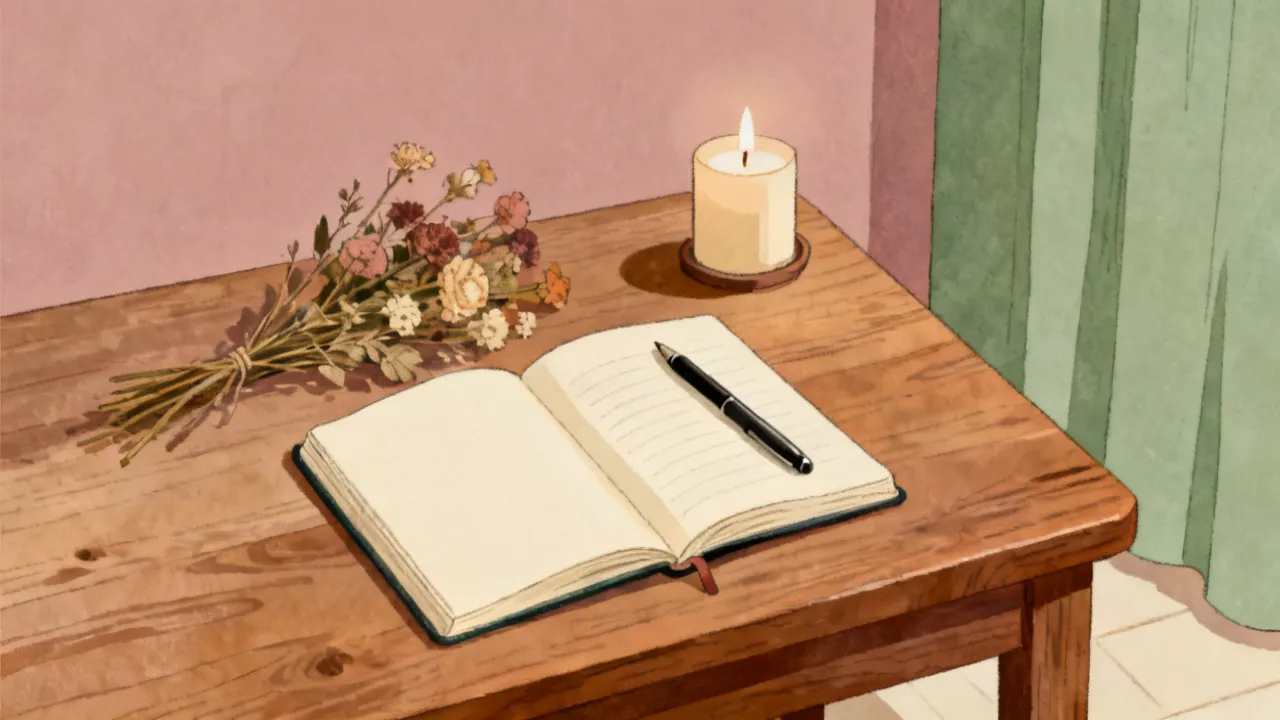
A blank page is intimidating when the subject is your childhood. You sit down, write "Dear little me" and then stare at the wall. Good prompts do the lifting. They ask small, specific questions that your mind can answer without drama, and they lead inward one step at a time. These thirty prompts are grouped by theme so that you can start gently and go where you are ready to go.
Before you write
Set the scene. A quiet corner, a warm drink, a timer for ten minutes. A candle or soft music if you like.
Ground first. Three slow exhales. Feet on the floor. Look around the room and name three things you see.
Make a rule. If you feel flooded, you can stop. Nothing needs to be finished.
Keep your tone kind. Write as you would to a child who is learning to trust you.
Plan aftercare. Walk, stretch, text a friend, do something ordinary.
Getting to know the child
- How old do you feel when you are most upset? What is that age like?
- What did you love doing when you were small?
- What made you laugh?
- Where did you feel safest?
- What did you wish adults understood about you?
Needs, met and unmet
- What did you need most as a child that you did not get?
- What did you get that you are grateful for?
- What did you need to hear and rarely heard?
- How were feelings handled in your home? Which were allowed?
- Whose feelings did you take care of? (See eldest daughter syndrome.)
Beliefs you picked up
- What did you learn about love as a child?
- What did you learn about mistakes?
- What did you learn about asking for help?
- Which rule from childhood do you still follow without questioning?
- If that rule were a person, what would you say to them?
The present echo
- When did you last feel small, scared or ashamed as an adult? What happened just before?
- Which person in your life triggers old feelings? What does the trigger remind you of?
- What do you do when you feel unsafe? (Freeze, flee, please, fight?)
- When do you feel most like yourself?
- What does your body do when you feel unloved?
Speaking to your younger self
- Write a letter that begins, "I want you to know that..."
- What would you say to the child on their worst day?
- What do you wish someone had said to you?
- What promise can you make to your younger self today, one you can keep?
- What does your younger self want you to do more of?
Care, comfort and play
- What is one small thing that would make you feel looked after this week?
- What would a day of play look like for you?
- Which comforting rituals did you have as a child? Can you bring one back?
- List five things you are allowed to need.
- Finish this sentence: "It was never my job to..."
How to use the prompts
Pick one from a theme and write for ten minutes without editing. If nothing comes, write "I don't know" and ask "If I did know, what would it be?" Skip any prompt that feels too heavy. The best prompt is the one that moves something a little, not the one that breaks you open.
Date each entry. After a few weeks, reread and look for repeating words or beliefs. Those patterns are the practical output of journaling: they tell you where to aim your attention.
When it gets heavy
Signs to pause: shaking, racing heart, numbness, feeling far away, sudden exhaustion. Stop writing. Orient to the room, press your feet into the floor, sip cold water and breathe out slowly. Contact someone if you need to. If feelings stay intense, talk to a licensed therapist. If you are in crisis, call or text 988 in the US.
If you have large gaps in memory, do not use prompts to force recall. See memory gaps for gentler options.
Pair journaling with the body
Writing works better with regulation. Try one minute of slow breathing before, and a stretch after. A hand on the chest while you write can help some people feel more present.
Turn insight into a small action
After a session, ask: what one thing can I do today because of what I wrote? Set a boundary, rest, call a friend, drink water. Insight without action fades.
Where Brightwind fits
Brightwind's two-minute test finds your likely pattern and builds a personalized plan where journaling sits next to inner child work, attachment practices and somatic and regulation exercises. The AI coach can suggest the next prompt when you are stuck. It is a self-help tool, not therapy, and it does not diagnose or treat. For a wider look at the options, read our guide to inner child healing apps or choosing a trauma healing app.
A note on safety and limits
Brightwind is a self-help and wellness tool for self-understanding. It does not diagnose any condition, it is not therapy and it does not treat or cure anything. If your past still hurts a lot, if you are struggling day to day or if you feel unsafe, a licensed therapist can offer what no app can. If you are in crisis or thinking about harming yourself, contact local emergency services or, in the US, call or text 988 right now.
Try the 2-minute test
If you want a starting point that is about you rather than about people in general, the Brightwind test takes about two minutes. It points to your likely trauma type and builds a personalized plan: inner child work, attachment practices, somatic and regulation exercises, journaling and an AI coach for hard moments. There is a 7-day trial, so you can see whether the approach feels right before you decide anything.