Eldest Daughter Syndrome: When You Grew Up Too Fast
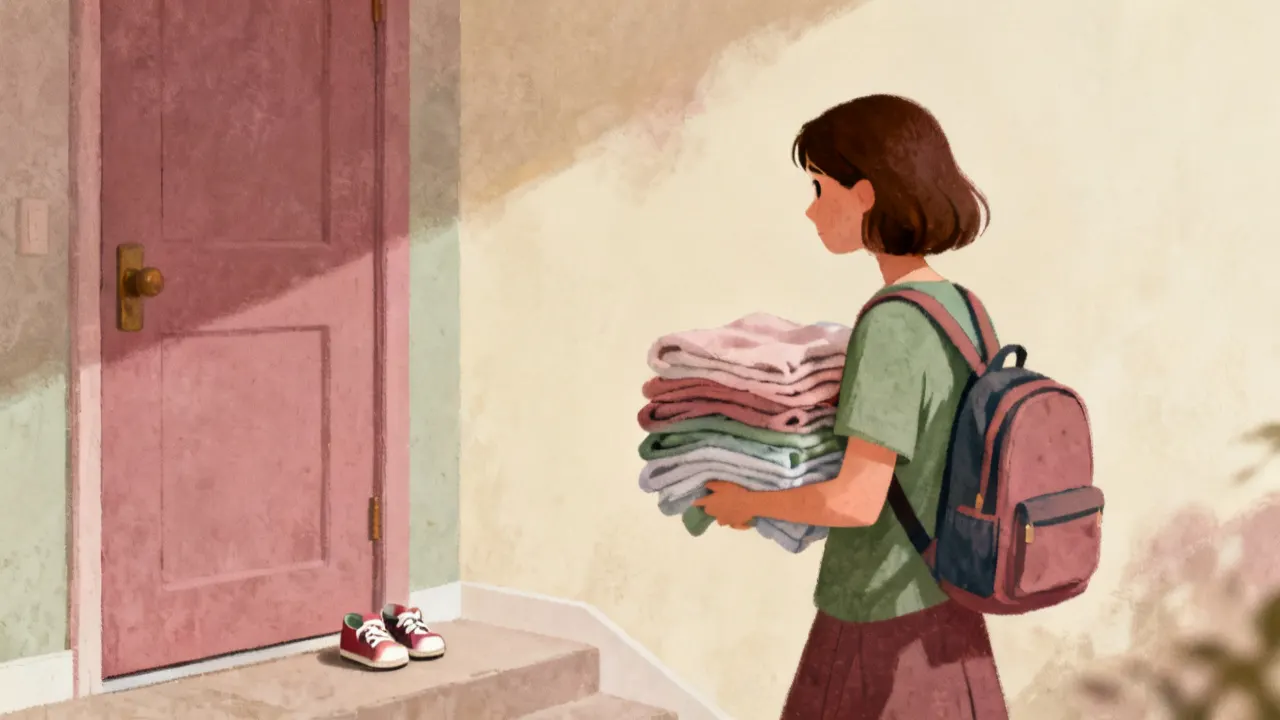
She packed lunches at nine. She mediated fights at twelve. By fifteen, she knew how to calm her mother, watch her brothers and say "I'm fine" in the exact tone that stopped further questions. Everyone called her mature. Nobody asked what it cost. If that sketch sounds familiar, you may be reading about yourself, and about the pattern the internet calls eldest daughter syndrome.
It is not an official diagnosis. It is a useful name for a real experience: growing up too fast because the family needed you to.
What the pattern looks like in childhood
- Looking after younger siblings as a second parent.
- Managing a parent's moods, being the confidante or peacemaker.
- Doing chores and tasks well beyond your age.
- Being praised as "responsible," "mature" or "my rock."
- Learning that your needs were an inconvenience, so you made them small.
The key feature is a role reversal: a child doing the emotional or practical work that belonged to an adult.
How it shows up in adulthood
Over-responsibility
You are the one who remembers the birthdays, books the flights, fixes the group project. If something goes wrong, you assume it is on you.
Difficulty resting
Downtime brings guilt. You feel the vague pressure of tasks you have not done. Even vacations get a to-do list.
People-pleasing
Saying no brings a physical discomfort. You read a room in seconds and adjust to avoid friction.
Perfectionism
Being good was the family's currency, so mistakes feel unsafe.
Resentment you do not quite allow
Underneath the competence, a quiet anger: why is it always me? The anger can feel shameful, so it turns into exhaustion.
Not knowing what you want
You have spent a lifetime tracking what everyone else needs. A simple question like "What do you feel like doing?" can leave you blank.
Struggling to receive
Compliments, help and care feel awkward. You are better at giving than at being held, which links to emotional neglect.
Why the role forms
Families under strain, such as a parent working long hours, illness, divorce, addiction, immigration or a lack of money, often lean on the oldest child. Cultural messages play a part too: girls are expected to be caring, helpful and quiet. A child who gets love and approval for being useful learns that usefulness is the price of belonging.
That lesson is not a character flaw. It is a smart adaptation to a family that needed it.
What it costs
The cost rarely shows in the list of accomplishments. It shows in burnout, in relationships where you do most of the emotional labor, in a body that stays on alert and in the sense that you have never been a child. It can also show as a fear that if you stop, everything collapses.
How to start putting the load down
Step one: name what is yours
Make three columns on a page: mine, shared, not mine. Under "not mine," write the things you carry that belong to others: a sibling's choices, a parent's feelings, a partner's schedule. You do not have to drop them all today. Seeing them is the first move.
Step two: practice a small no
Choose a low-stakes request and decline it with a kind sentence: "I can't take that on this week." Notice the guilt, breathe, and let it pass without fixing. Guilt is not proof that you did something wrong. It is the old role sending a message.
Step three: ask for something
Ask a friend to pick the restaurant. Ask a colleague to share a task. Ask a partner to plan the weekend. Let someone else carry the thread.
Step four: rest on purpose
Schedule rest as if it were a meeting. Start with fifteen minutes and do nothing productive. If it feels awful, that is information.
Step five: grieve what you missed
There is sadness under the competence: for the childhood you did not get to have. Give it room. Inner child work is made for this. Read the inner child healing guide for a ten-minute practice.
Step six: find your own wants
Make a list of ten small things you like, without justification. Try one this week.
Family dynamics
You may need to renegotiate roles with parents and siblings. Change takes time and can meet resistance, because the system relies on you. Go slowly, keep requests specific and look for allies. Sometimes the work happens more inside you than in the family, and that is allowed.
A note on pride
You are good at taking care of people. You do not have to stop. The aim is choice: giving because you want to, not because you will be punished if you do not.
When to get extra support
If you feel persistently exhausted, hopeless or numb, or if responsibility has overtaken your health, speak with a licensed therapist. Support groups for adult children and caregivers can also help.
Where Brightwind fits
The two-minute Brightwind test looks at patterns like over-responsibility and emotional dysregulation, then builds a personalized plan: inner child work, attachment practices, somatic and regulation exercises, journaling and an AI coach to talk through the guilt after a boundary. It is a self-help tool and not therapy.
A note on safety and limits
Brightwind is a self-help and wellness tool for self-understanding. It does not diagnose any condition, it is not therapy and it does not treat or cure anything. If your past still hurts a lot, if you are struggling day to day or if you feel unsafe, a licensed therapist can offer what no app can. If you are in crisis or thinking about harming yourself, contact local emergency services or, in the US, call or text 988 right now.
Try the 2-minute test
If you want a starting point that is about you rather than about people in general, the Brightwind test takes about two minutes. It points to your likely trauma type and builds a personalized plan: inner child work, attachment practices, somatic and regulation exercises, journaling and an AI coach for hard moments. There is a 7-day trial, so you can see whether the approach feels right before you decide anything.