Attachment Style Test: Find Your Pattern and Work With It
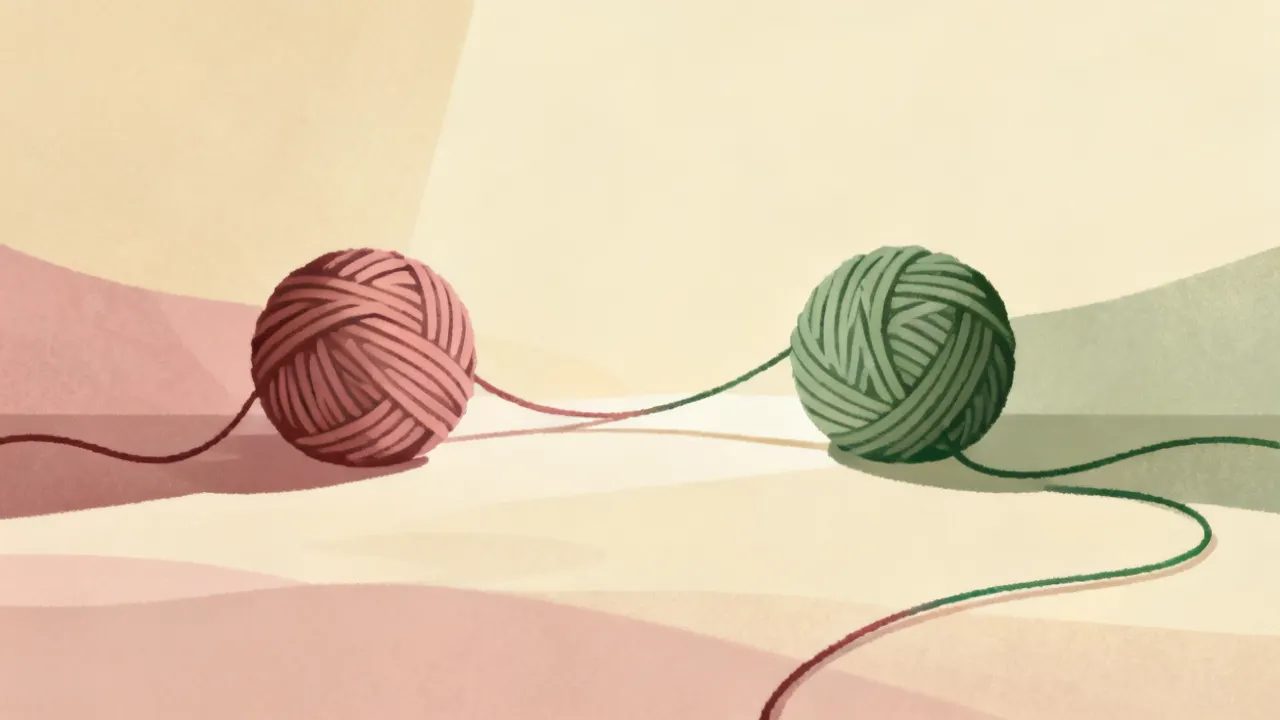
You can tell a lot about attachment from the way someone checks their phone. One person puts it face down and forgets about it. Another watches it like a pot about to boil. A third leaves it in another room for two days. Each is acting out a lesson learned long ago about whether people come back. An attachment style test tries to name that lesson.
This guide explains the four styles, how to take a test well and what to do with your result, especially if your answers point away from "secure."
The four styles in plain language
Secure. You can ask for what you need, tolerate closeness and tolerate space. Conflict is uncomfortable but survivable. Secure does not mean perfect. It means that you generally trust repair.
Anxious (preoccupied). You want closeness and worry you will lose it. You may need frequent reassurance, read small changes as rejection and put your own needs after keeping the peace.
Avoidant (dismissive). You value self-reliance and feel uneasy with intense emotional need, yours or theirs. You may pull back when a relationship deepens.
Disorganized (fearful-avoidant). You want closeness and fear it. You may swing between pursuit and withdrawal, often because closeness once came with unpredictability.
These are patterns, not boxes. Most people show a main style and flashes of others under stress.
How a good attachment test works
It asks about behavior in close relationships. Typical questions:
- When a partner is distant, do you reach out, retreat or shut down?
- How comfortable are you depending on someone?
- Do you worry that people do not value you as much as you value them?
- Do you feel smothered when someone wants more time?
Look for tests that give you a spectrum, not a single label, and that explain what to do next. Our trauma type quiz guide places attachment among other patterns such as hypervigilance and dissociation.
Reading your result without shame
Your style is an adaptation. A child who learned that crying brings no comfort becomes an adult who handles feelings alone. A child who got attention only when things were dramatic becomes an adult who escalates to be seen. Those were intelligent moves.
Ask yourself:
- Where does this show up? Dating, friendships, work, family?
- What is the trigger? Silence, criticism, plans changing?
- What do I do next? Chase, hide, freeze, fix?
- What do I need underneath? Reassurance, space, honesty, safety?
What helps by style
If you lean anxious
- Build a soothing routine for waiting: breathe, move, do something absorbing.
- Practice asking directly: "I'm feeling a little unsure. Can you tell me where we stand?"
- Collect evidence of safe moments, such as the times someone did come back.
- Develop a life that holds you up, with friends, interests and rituals.
If you lean avoidant
- Notice your cue to leave (a tight chest, a sudden to-do list).
- Share one small feeling a day, even if it is "I'm tired and a bit raw."
- Let someone help with something small.
- Remember that need is not weakness.
If you lean disorganized
- Prioritize safety and consistency in your environment.
- Use grounding when the push-pull starts.
- Move slowly with new people and observe their reliability.
- Consider working with a therapist trained in attachment, because this style often benefits from guided support.
If you lean secure
Keep doing what you do, and be patient with partners who are still learning. Secure people are often the safe base that helps others shift.
Can you change your style?
Yes, gradually. Researchers talk about "earned security," which means developing secure patterns through steady relationships, therapy and inner work. It does not erase your history. It changes how much your history decides what you do next.
Three engines drive change: a safe other person, a calmer nervous system and a kinder inner voice. Inner child work speaks to the third. Read how in our guide to the inner child healing app.
Attachment and the "am I the problem?" question
Many people discover their style in the middle of a hard relationship and wonder whether they are the toxic one. The honest answer is usually more nuanced than yes or no. Our guide on the toxic-or-victim quiz helps sort patterns from harm.
Mistakes with attachment tests
- Using the label to diagnose a partner.
- Treating a style as a life sentence.
- Skipping the body: attachment is felt in the stomach and chest, so regulation practices matter.
- Doing it alone in a crisis. Support helps.
A week of practice
Day one, take the test. Day two, write about a recent moment when your pattern fired. Day three, try a calming exercise before replying to a message. Day four, name your need to someone safe. Day five, notice a time you felt secure. Day six, rest. Day seven, review.
That is the shape of the personalized plan in Brightwind: a two-minute test, then small steps, inner child work, journaling and an AI coach when the pattern fires.
A note on safety and limits
Brightwind is a self-help and wellness tool for self-understanding. It does not diagnose any condition, it is not therapy and it does not treat or cure anything. If your past still hurts a lot, if you are struggling day to day or if you feel unsafe, a licensed therapist can offer what no app can. If you are in crisis or thinking about harming yourself, contact local emergency services or, in the US, call or text 988 right now.
Try the 2-minute test
If you want a starting point that is about you rather than about people in general, the Brightwind test takes about two minutes. It points to your likely trauma type and builds a personalized plan: inner child work, attachment practices, somatic and regulation exercises, journaling and an AI coach for hard moments. There is a 7-day trial, so you can see whether the approach feels right before you decide anything.