Am I the Toxic One in My Relationship? Questions to Ask Yourself
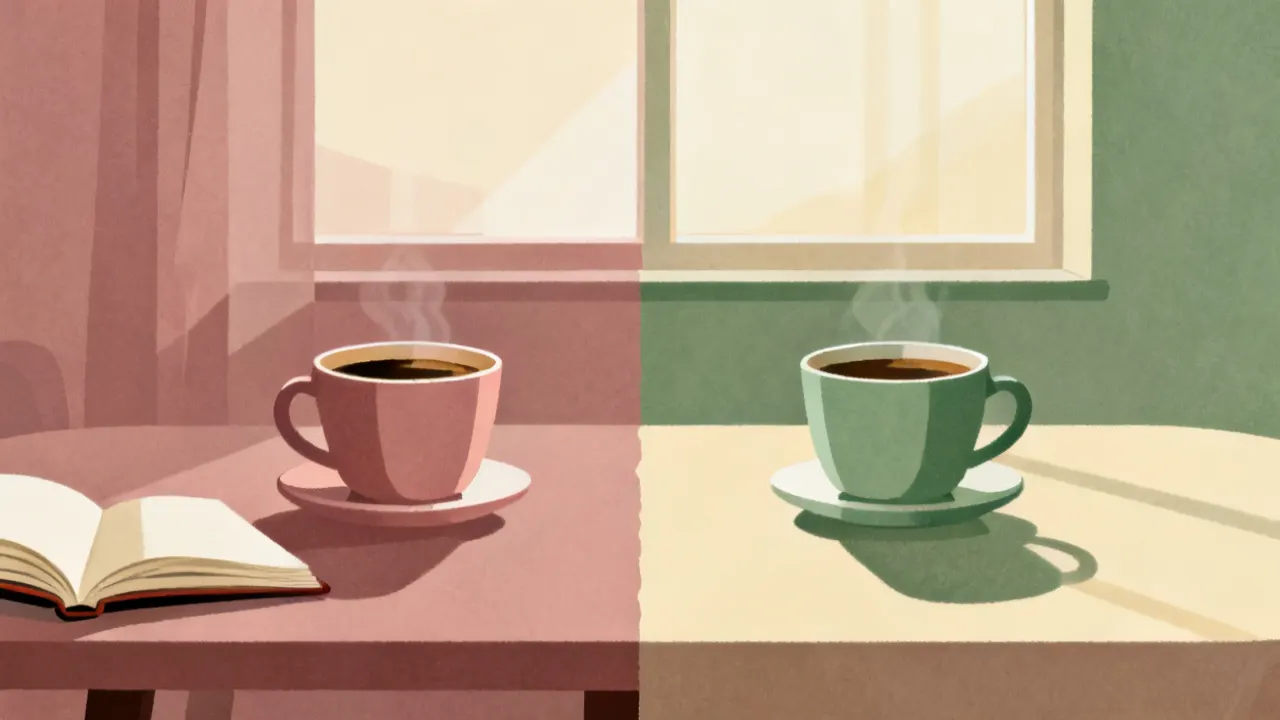
It usually arrives after a fight. The door has closed, your partner's face is still in your mind and a quiet voice asks: what if it's me? What if I'm the toxic one? Or the opposite voice: what if I'm the one who is always blamed? Both questions come from the same place, which is a childhood that taught you to read relationships through blame.
This guide offers a reflective way to sort it out. It is not a verdict or a diagnosis. It is a set of questions to help you separate hurt patterns from harmful behavior.
First, a safety line
If you are afraid of your partner, if they control your money, movements or friends, threaten you or hurt you, this is not a self-reflection issue. Contact a trusted person or a hotline. In the US, the National Domestic Violence Hotline is 1-800-799-7233, and emergency services are available at 911.
Why people ask
People raised in unpredictable or critical homes often learned that when something went wrong, someone had to be at fault. As adults, they turn that lens on themselves or on their partner, flipping between "it's all my fault" and "it's all theirs." Real relationships rarely work that way. They involve two nervous systems, each with a history.
Questions about your behavior
Answer honestly, with notes if useful. A "yes" is not a sentence; it is information.
- Do I raise my voice, insult or use sarcasm to win?
- Do I punish with silence for days?
- Do I check my partner's phone, location or messages?
- Do I blame them for my moods?
- Do I threaten to leave to get a reaction?
- Do I rewrite events to avoid being wrong?
- Do I take it out on them when I am stressed?
- Do I make them feel guilty for spending time with friends or family?
A few yeses suggest habits to work on. Many yeses, especially around control, deserve serious attention and likely professional support.
Questions about your experience
- Do I feel afraid of their reactions?
- Do I walk on eggshells?
- Do I doubt my memory because of how they describe events?
- Am I isolated from people who care about me?
- Do I apologize for things that are not mine to apologize for?
- Do I feel worse about myself since the relationship began?
Yeses here point toward a relationship that may be harming you, and a conversation with a counselor can help you see it clearly.
The grey area: trauma patterns
Most couples live in between. Maybe you shut down during conflict, and your partner takes it as punishment. Maybe they pursue, and you hear control. This is the push-pull of mismatched attachment styles. Read the attachment guide for how anxious and avoidant patterns collide.
Other patterns that can feel toxic from either side:
- Emotional dysregulation. Big feelings that spill out as harsh words, followed by shame.
- Hypervigilance. Reading neutral things as threats.
- Avoidance. Withdrawing at the moment closeness is needed.
- Projection. Seeing in your partner the people who hurt you.
Our trauma type guide describes these patterns in detail.
Harm versus hurt
A useful distinction: hurt comes from two people's wounds meeting. Harm comes when one person uses power to control or diminish the other. You can cause hurt without being abusive, and you can be hurt without being a victim of abuse. The question to ask is not "Am I a good or bad person?" but "What am I doing, why and what do I want to do instead?"
What to do if you recognize your own patterns
Name it without drowning in shame
"I tend to go cold for days when I feel criticized." Say it plainly. Shame makes people defend; clarity makes them change.
Find the trigger
Write about the last three fights. What happened in the 30 seconds before your reaction? Which memory does it echo?
Build a pause
When you feel the surge, say "I need twenty minutes," go somewhere safe, breathe out long and return. A pause is not avoidance if you come back.
Repair
Apologize without a "but." "I raised my voice, and that wasn't okay. I want to talk again calmly."
Do the deeper work
Therapy is the strongest option. Between sessions, self-help practices such as grounding, journaling and inner child work can help. See the inner child guide.
What to do if you are the one being hurt
Document what happens. Talk to someone outside the relationship. Do not wait for a perfect explanation. You can leave a harmful situation without proving that the other person is a villain.
Where Brightwind fits
The Brightwind test takes about two minutes and looks at your relational patterns, your triggers and how your body responds under stress. It then builds a personalized plan for self-understanding, with regulation exercises, attachment practices, journaling and an AI coach for the moments after a fight. It is a self-help tool, not couples therapy and not a verdict on anyone's behavior.
A note on safety and limits
Brightwind is a self-help and wellness tool for self-understanding. It does not diagnose any condition, it is not therapy and it does not treat or cure anything. If your past still hurts a lot, if you are struggling day to day or if you feel unsafe, a licensed therapist can offer what no app can. If you are in crisis or thinking about harming yourself, contact local emergency services or, in the US, call or text 988 right now.
Try the 2-minute test
If you want a starting point that is about you rather than about people in general, the Brightwind test takes about two minutes. It points to your likely trauma type and builds a personalized plan: inner child work, attachment practices, somatic and regulation exercises, journaling and an AI coach for hard moments. There is a 7-day trial, so you can see whether the approach feels right before you decide anything.